
Birdwatching is a hobby that millions of people throughout the world engage in every day, from the elderly to schoolchildren. As the name suggests, what the hobby entails on a base level is simple enough: watching birds. It can be done wherever, be it through the window at home or out in the vastness of wilderness, and with any level of intensity.
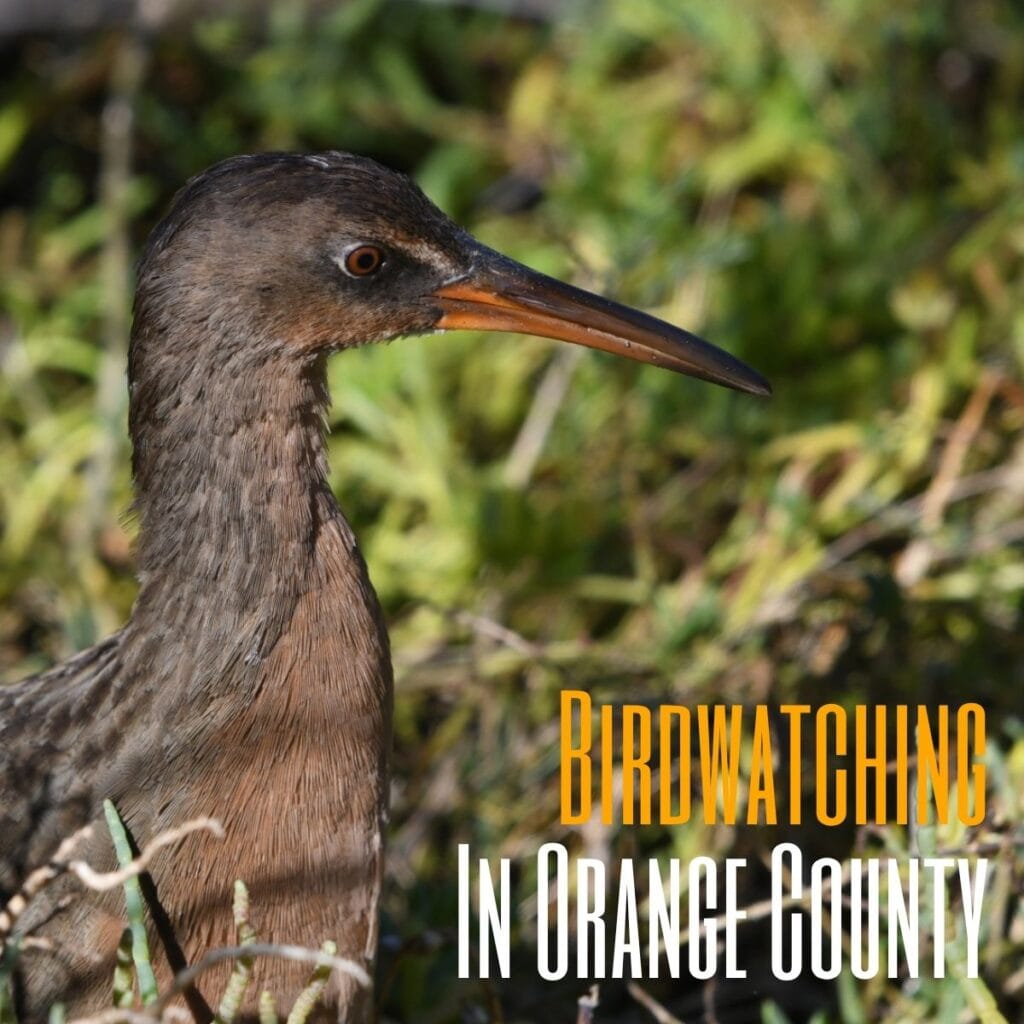
The most enthusiastic of these hobbyists often refer to themselves as “birders”, with the term “birding” used to emphasize their more intensive pursuit of birds compared to the more casual (but no less respectable!) birdwatcher. In this article, however, for the sake of simplicity, the terms “birder” and “birdwatcher” will be used interchangeably.
The state of California as a whole is among the best in the country for birdwatching, thanks to both its immense habitat diversity, enabling the state to house hundreds of species throughout every season, and its geographic location, which allows it to regularly host vagrant (out-of-range) birds from not only the more inland or eastern states, but also from other countries, like tropical species from Mexico, Old World strays from Siberia or Alaska, or far-flung seabirds from just about every corner of the world’s oceans.
Orange County may not be the largest or most biodiverse county in the state, but its position within Southern California and plethora of friendly, easily-accessible birding locations means that it can punch far above the weight class its size might make one expect.
As of April 2026, 509 different species have been observed in Orange County on eBird.org, ranking it 6th in the state; and due to the accessibility of its best locations, it is the 3rd most popular county in the state, just behind the much larger San Diego and Los Angeles Counties (1st and 2nd respectively).
OC is also positioned nicely along the Pacific Flyway, North America’s westernmost route for migratory birds, and contains several notable locations (which will be detailed in this article) where dozens of species stop during the migratory seasons and/or return yearly for the breeding and wintering seasons.
Why You Should Start Birdwatching
Bird watching is an easy hobby to get into that promotes greater personal connection to the natural world on a year-round basis, and has benefits that run deeper than one might think:
- Increased time outdoors is always beneficial to mental health, especially in the realm of stress reduction. People who regularly go birding have shown reduced symptoms of anxiety and depression, and those who spend time in green spaces report an overall more positive mood.
- When introduced to and engaging regularly in birdwatching, children display better concentration and fewer behavioral issues in school. Young children who engage in outdoor activities like birdwatching not only reap the rewards of time spent outside, but also develop their motor skills and increase their net knowledge as well!
- Studies show that birding reshapes your brain for the better! Those with years of birding under their belt show more development in areas of the brain related to attention and vision—developments which appear to resist age-related decline. That means that birdwatching can help to preserve your cognitive functions as you get older!
Best Places for Birdwatching in Orange County
Coastal wetlands are a great place to go for waterfowl, shorebirds, and other water-reliant species. Usually characterized by large saltwater basins or a mixing of fresh and saltwater, and the presence of salt-tolerant plants like pickleweed and sandy dunes.
Bolsa Chica Ecological Reserve is far and away the best example of this habitat, possessing the 3rd highest species count in Orange County at 312 and being among the most popular birdwatching locations in OC, with dozens of people visiting weekly just to see birds. Upper Newport Bay is another good example, with many trails and bridges crossing the bay. Both are home to dozens of interesting species, with an abundance of terns and swallows during the summer, and gulls and waterfowl by the hundreds in the winter. Year-round, several species of heron and many kinds of shorebirds can be observed.
The close proximity of their trails to the natural habitats means that the birds are often close by, and for Upper Newport Bay, kayak tours are regularly offered by the Newport Bay Conservancy, and the Sea and Sage Audubon Society offers pontoon trips through it every few months.
Regional & Urban Parks are often composed of a variety of habitats and offer an easy way to get out in nature while still sticking close to home. Of the urban locations, Huntington Central Park is the most well-known and heavily birded, having the top species count for OC at 339 recorded species as of this article’s publishing. Its variable habitats and the presence of large lakes makes it especially well-suited for migratory species, with dozens of rare and uncommon species reported each season. Local readers might be aware of the Bald Eagle that favors the trees above Kathy May’s Lakeview Cafe on the park’s West side, who has been returning for years each winter.
Places like Mile Square Regional Park in Fountain Valley, William R. Mason Regional Park in Irvine, Laguna Nigel Regional Park in the city of the same name, Harriet M. Wieder Regional Park in Huntington Beach, and Irvine Regional Park in the city of Orange are all among Orange County’s top 20 birding hotspots by species count, and each offer a diverse array of species that are less common elsewhere in the county.
Mile Square and Mason are among those parks that carry high quantities of migrants during the spring and fall, and Weider and Laguna have higher concentrations of species that can be difficult to find elsewhere in the county. Parks in this category often have many accessible trails and cover a decent area, offering plenty to easily explore.
Some, like Mile Square and Irvine, offer more than just walks through nature, as well; Mile Square, for example, has an archery range and golf course, and Irvine is home to the OC Zoo and has campgrounds right nearby.
And of course, for those that prefer more intensive hikes, places like Santiago Oaks Regional Park in Orange border the foothills of OC, with their location meaning that they possess more habitat resembling the county’s original ecological makeup from before the advent of human civilization in the area.
Wildlife Refuges, relatively few in number as they may be in Orange County (compared to the many small urban parks), are fantastic locations for birdwatching, thanks especially to their abundance of good natural habitat.
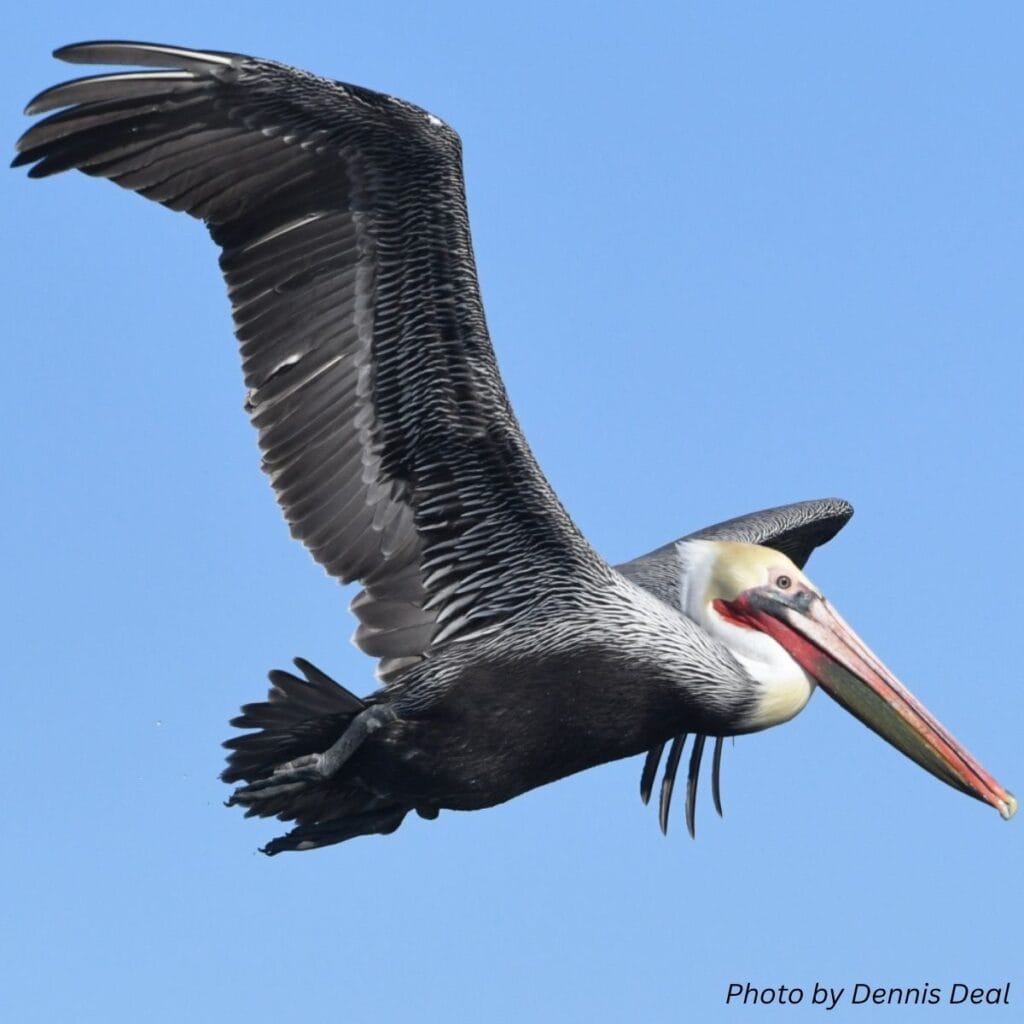
- IRWD San Joaquin Marsh & Wildlife Sanctuary, located just across the river from University of California, Irvine, is a wildlife sanctuary centered around several large water treatment ponds, which have been transformed into coastal freshwater wetlands and are surrounded by riparian woodlands, which mesh together to create a place with the second highest species count in the county—only five behind Huntington Central Park at 334. This location regularly supports visitors from all walks of life on the daily with 12 miles of easily walkable trails, and is home to the Sea and Sage Audubon Society’s headquarters, making this location great for those who not only are new to birdwatching, but also want to get familiar with the birding community in Orange County. Bird walks are a regular occurrence, and the location occasionally hosts rare birds that draw dozens to see them, especially during shorebird migration in the fall, so there is no lack of opportunities to meet other birders. In terms of expected birds, SJMWS is home in the spring and summer months to many swallows, with Tree Swallows the most abundant by far. Passerines like flycatchers and warblers are a frequent sight at this time as well, and during the winter, waterfowl numbers are cranked to the max. This place is also among the best locations to watch Clark’s and Western Grebes, whose stunning courtship displays are a must-see for any bird enthusiast.
- Tucker Wildlife Sanctuary leans a little in the opposite direction of San Joaquin Marsh in the best way possible. While SJMWS is more polished, Tucker is less restrained in its approach to delivering nature to the people. The location is packed with the glory of dozens of large oak trees, whose reaching limbs shade Tucker’s trails year-round. It has several paved trails, making for easy access by younger or disabled people, and one spot allows access to the small creek running through it. Its location in Modjeska Canyon, right at the bottom of Orange County’s mountain range, means that it perfectly exemplifies the California Oak Savannah, enabling those unwilling to take on lengthy hikes to explore this beautiful aspect of OC’s untamed wilderness. Be sure to look up the location’s hours, though. However, visiting during closed days is never a waste. The nature center next to the parking area has several hummingbird feeders that are always buzzing with action; and the area around Tucker and Modjeska is widely the same habitat, so waiting long enough will all but guarantee that the birds come to you. There is also the Chaparral Trail right by the entrance of the Harding Truck Trail, which doesn’t follow the closing hours of Tucker and offers a glimpse into another habitat: the Pacific Chaparral, North America’s only truly Mediterranean shrubland, which coats much of OC’s wilderness but is most vast in the mountains. And speaking of the Harding Truck Trail…
- Cleveland National Forest is represented in OC by the Santa Anas, a relatively small mountain range culminating at Modjeska and Santiago Peaks, and is best accessed via truck trails; specifically, the Harding and Maple Springs Truck Trails. Harding is easier to access, and is limited to hikers and bikers, but has more of a focus on dry chaparral scrub with few to no water sources outside Laurel Springs, which requires a 9.5 mile round-trip hike to access. For the hardcore Orange County birder, Maple Springs has more to offer, but Harding is a fantastic, beautiful hike for those seeking a challenge and can certainly deliver some great birds that are difficult to find elsewhere. By comparison, Maple Springs is perhaps a more popular destination for the nature enthusiast or outdoorsman, as the first few miles (especially the portion labeled as Silverado Canyon Road) are thick with dense riparian woodland courtesy of the rivers and streams running alongside the road. These areas are home to plenty of fascinating plants and animals, including uncommon amphibians like the California Newt and California Tree Frog. While traversing the paved portion of the road, you’ll come across several locations where the river crosses the road. These little creek crossings are great places to watch for hummingbirds and songbirds, as the mix of flowing and gathering waters are great for drinking and bathing alike. Further up the trail, there exists an abundance of oak scrub habitat, as well as the occasional smattering of pine trees. Relatively close to the peak is a parking lot where one may depart for a hike to the top of either peak, with the trek to Santiago Peak a lengthy but beautiful and rewarding 10-mile or so round trip. Regardless of what portion of these truck trails you travel, they offer unique birds that can be exceedingly difficult to find elsewhere. Do be wary, however, as Maple Springs is very unkempt compared to the average trail. Its paved section is filled with potholes that make navigation difficult, especially in areas where the asphalt has eroded enough to form sizable gaps between chunks of road. After a few miles, the pavement halts, and the road continues as a rocky dirt path. The road as a whole is narrow, and I cannot emphasize enough the importance of a wary mindset, a keen eye, and careful restraint. Be cautious when passing other vehicles if you yourself are driving, as these roads often lack cell service, meaning an accident could leave both groups stranded for hours at best. Drive a vehicle with high clearance, as lower cars can and will have their bottoms sheared away by a bad pothole or large rocks in the road. Be smart when hiking, as foolish people exist everywhere and not everyone has the common sense to take the road slowly. If visiting in the earliest hours or in the evening for the owls present throughout the mountains, keep flashlights on hand and wear highly visible colors or reflective gear, and take every other precaution necessary and appropriate for hikes of this severity. Your caution keeps everyone around you safe.
The Rules of Birdwatching
- Respect wildlife and maintain distance. While animals can approach people on a whim, that does not mean you ought to do the same to them. Wildlife is a tender and fickle collective, and staying an appropriate distance away ensures that you and they are safe from harm. This is a fact that ought to be kept in mind for all wildlife, and is a basic point of outdoorsman etiquette.
- Stay on designated trails. In a world where so much of the natural world has been destroyed and degraded, do your part by keeping to designated trails. Trailblazing can damage plants, many of which are important and/or imperiled food sources for birds, as well as risk harming insects, reptiles, and ground-nesting birds. It also puts the individual at risk of things like snakes and harmful plants—think stinging nettle, Pacific poison oak, and poodle-dog bush.
- Avoid loud noises or flushing birds. While birds in local parks are often used to human presence and the urban soundscape, it is important to remain respectful of their presence and observe them on their terms. Exceedingly loud noises can scare off birds, and intentionally flushing birds (disturbing birds, causing them to fly away; owls are a frequent victim of this practice), something done especially for the sake of photography, causes birds to burn energy, keeps them from resting, disturbs their hunting/foraging, and often involves disturbing the habitat around them.
- Do not disturb nests. Practices like the ones above (trailblazing, flushing birds, loud noises) can disturb nesting species, causing them to abandon in-process nests, eggs, or—worst of all—newborn birds, which is a death sentence for them and is especially tragic for species that only nest once a year. The number of species that breed in Orange County has fluctuated over the decades, and many of those that do so less or not at all nowadays are often species notable for being threatened or in decline. In addition to keeping your distance from nests, it is important to avoid disturbing habitats blindly, as such actions can damage nests like mentioned above. By being aware of and respectful to nesting birds, you help bird populations in their gradual fight for recovery.
- Follow park and wildlife refuge rules. These rules, which often entail what is in this section and more, are imperative to adhere to, as it ensures the safety of yourself, others, and the natural world; and in addition to such actions, it makes sure that other people in the future are able to enjoy nature just as we do today. If that alone isn’t enough to persuade you, breaking the rules set in place in certain areas can have legal consequences such as fines of up to thousands of dollars and even imprisonment if the disturbance is severe enough.
- Practice Ethical Photography. Many birders are also photographers, as a digital camera is very helpful for identifying birds, especially very energetic species, birds in flight, and individuals at a distance. However, there are some that engage in very unethical practices, with the most disrespectful often “flushing” or scaring away perched or resting birds to get flight shots. Raptors, especially owls, are the most heavily targeted by these practices due to their widespread appeal and majesty, and because of this, rarer species like Snowy, Great Gray, and Long-eared Owls, to name a few, generally have their exact locations hidden from those outside trusted groups to protect these already threatened birds from further persecution at the hands of disrespectful onlookers.
How to Get Started with Birdwatching in OC
Learning Resources for New Birders
- Sea & Sage Audubon Society – The National Audubon Society, named for ornithologist, naturalist, and artist John James Audubon, is a collective operating throughout the Americas with the goal of protecting birds and the natural world that surrounds them. Many areas have their own local “Audubon Society”, with the state of California possessing 48 independent chapters throughout the state. In Orange County, our primary Audubon Society is the Sea & Sage Audubon, located at the IRWD San Joaquin Marsh in the city of Irvine. These societies are often welcoming of new birders of any age, regularly hosting events throughout their region. Such events can be just about anything from birding walks at local parks and natural areas to educational classes on bird identification or other avian-related topics.
- OC Parks Bird & Nature Walks – Via the OC Parks website and Let’s Go Outside, those interested can register to participate in a variety of outdoor activities, from bird-focused walks to bat observation and geology hikes.
- Local Nature Centers – Many local nature & interpretive centers offer birding walks at various parks, or have educational resources to learn about the wildlife found within.
- Finally, community meetups or guided walks held by local groups can be found with a bit of research.
What You Need for Bird Watching
You don’t need a lot of fancy equipment to start birdwatching. Binoculars, appropriate clothing/shoes, water, and a way to identify/log birds is really enough. But if your birdwatching activity becomes more frequent, here are some things you might want to have for your excursions.
- Binoculars are very nearly a must-have. As the primary tool of birders since the mid-1900s, their ability to bring the small and distant up close makes the challenges of observing birds much less of an issue. They made ornithology a practice that didn’t require the constant death of birds for the sake of study, and are generally versatile, fairly sturdy, and easy to carry. When selecting your binoculars, it is recommended to do some research into the different kinds available, and determine which specs are your desired combination. In general, binoculars will be associated with a number; for example, 10×32. The first number is the magnification strength. In this case, 10x magnifies the target by 10 times. The second number is the lens diameter (32mm, in this case), which determines the size of your binoculars. Larger binoculars will provide more detailed images, but a lighter pair can be a little more comfortable for those without the space to spare. Even a compact pair can work. It’s all about finding the pair that best suits your circumstances.
- As always, when exploring the outdoors, be prepared by wearing the proper clothes and shoes for the expected conditions, and apply things like sunscreen and bug spray as needed to protect yourself from the elements. Always be alert and aware of the conditions you intend to go out in. There are very few birds worth getting sunburned, dehydrated, or injured over.
- Notebook or app for logging your sightings.
- Comfortable daypack: A small backpack is useful for carrying binoculars, water, snacks, sunscreen, a field guide, and whatever else you need for a few hours outdoors. You don’t need a specialized birding pack; any comfortable daypack will do.
- Water bottle or hydration pack: Birding often involves more walking than a newcomer might expect, particularly at places like San Joaquin Marsh, Bolsa Chica, or the larger regional parks. Staying hydrated is especially important in Orange County’s warmer months.
- Sun protection: A wide-brimmed hat, sunglasses, and sunscreen are useful additions for long periods spent outdoors. A hat is particularly nice for birding because it can help reduce glare when looking upward into trees or across open wetlands.
- Insect protection: Depending on the location and season, insect repellent can make a big difference, particularly around wetlands and areas with standing water. Just use it responsibly and avoid applying sprays directly around birds or other wildlife.
- Portable phone battery: Your phone can end up doing considerably more work than you expect, especially if you’re using Merlin, eBird, iNaturalist, GPS, or taking photographs. A small power bank is inexpensive insurance against ending up with a dead phone several miles from your car.
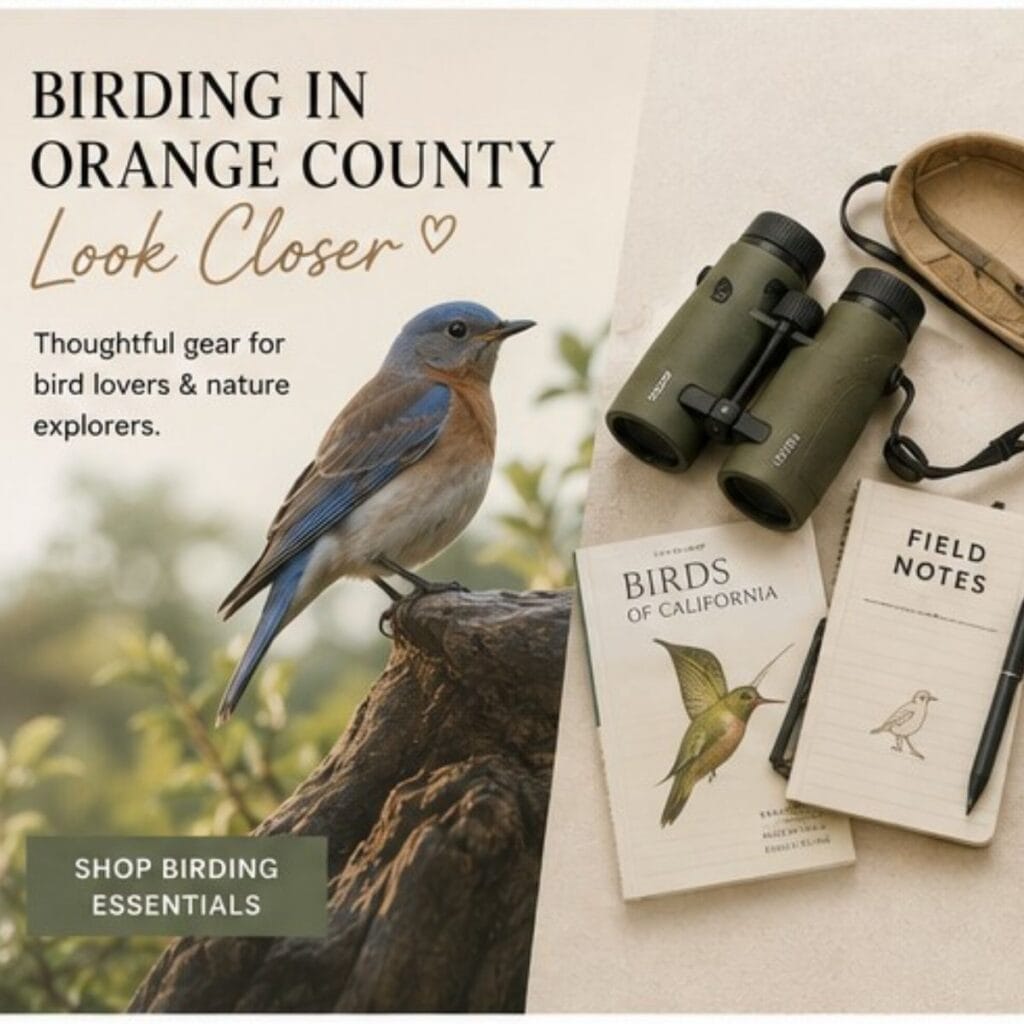
Optional Birdwatching Gear:
- Field guide: A physical bird guide can be especially helpful when you’re learning the basics and want to compare similar species. There is something satisfying about flipping through a real book while sitting quietly in the field, although digital guides are easier to carry.
- Bird identification app: Merlin Bird ID is an excellent beginner-friendly option, while eBird is particularly useful for recording sightings and researching what has been reported at different locations.
- Camera or telephoto lens: Photography is a great complement to birdwatching and can help with identification, particularly when a bird is too far away to confidently identify through binoculars. The important part is letting the camera bring the bird closer rather than physically approaching the bird yourself. Never chase, corner, flush, bait, or otherwise disturb a bird for the sake of getting a photo.
- Spotting scope: A spotting scope is essentially a more powerful, tripod-mounted optical system and is particularly useful for viewing distant shorebirds and waterfowl across large wetlands. It is absolutely not necessary for beginners, but can be a worthwhile investment for someone who becomes more serious about birding.
- Lightweight binocular harness: Optional, but particularly nice for people who spend several hours birding. A harness keeps binoculars readily accessible without leaving them hanging heavily from your neck all day.
Affiliate Disclosure: This article may contain affiliate links, which means Enjoy Orange County may earn a small commission if you make a purchase, at no additional cost to you. We only recommend products and services we use or believe are worth sharing with our readers. As an Amazon Associate, Enjoy Orange County earns from qualifying purchases. Thank you for supporting our work and helping us continue creating free local guides and resources.
Tracking Your Birds
Birding Apps: There are several excellent apps available to help birders identify and record their sightings. As mentioned above, Merlin Bird ID is particularly useful for beginners, as it can help identify birds using photographs, descriptions, or even their songs and calls. eBird is one of the most widely used tools among serious birders and allows users to record sightings, keep personal life lists, explore birding hotspots, and see what species have recently been reported in a particular area. Its huge database also makes it an invaluable resource for figuring out what birds you might encounter at different locations and times of year. iNaturalist is another useful option, especially if you want to keep track of more than just birds, as it allows users to document and identify plants, insects, reptiles, mammals, and other organisms you find outdoors. Using these apps together can make it much easier to learn as you go while also contributing your observations to larger scientific databases.
Keep a Personal Birding Journal: There is something satisfying about keeping your own record of the birds you encounter. A birding notebook can be as simple or elaborate as you want: write down the date and location, list the species you saw, and add notes about interesting behavior, weather, habitat, or anything else that stood out. Over time, these records become a personal history of your birding adventures. You may eventually notice patterns that are difficult to appreciate from a single outing, such as the first date you see a particular migrant every year or which local parks consistently produce certain species. And unlike an app, a physical journal gives you a place to record the experience itself, not just the bird.
Join Local Birding Groups: Bird watching is an especially social hobby, despite how much time can be spent quietly standing alone with binoculars. Orange County has an active birding community, and joining local groups can be one of the quickest ways for a new birder to learn about the hobby. Online birding groups and OC-based Facebook communities regularly share unusual sightings, identification questions, photographs, and information about local birds. Even our local high schools have birding clubs for younger birders. These groups can also be useful for finding organized bird walks and learning about birds that have recently appeared in the county. Just remember that responsible birders generally avoid publicly sharing exact locations of particularly sensitive or threatened species, especially nesting birds and rare owls. Sharing knowledge is one of the best parts of the birding community, but protecting the birds should always come first.
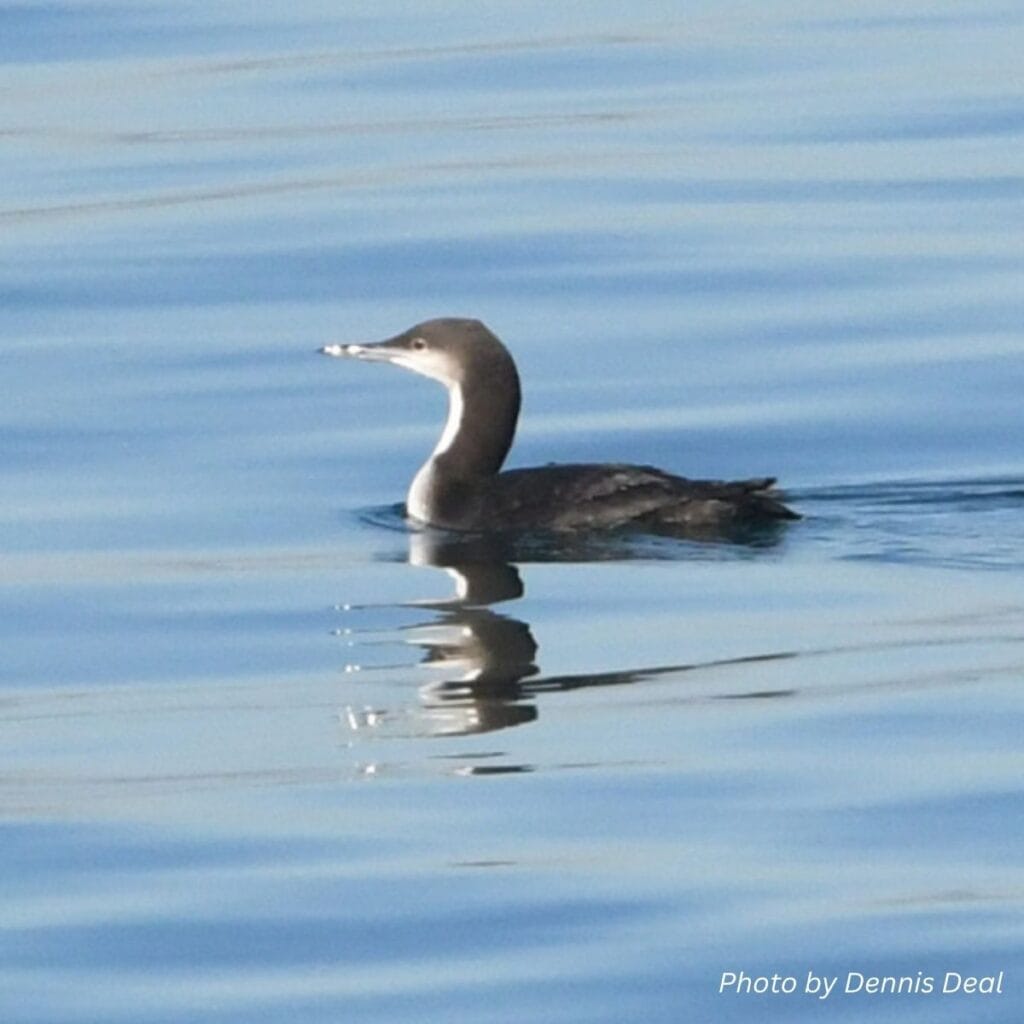
Coolest Rare Birds Spotted in OC
- Lesser Frigatebird: Despite being the smallest of its genus, the Lesser Frigatebird is still a grand, elegant, and magnificent tropical seabird, capable of great feats of flight and agility. This species has been seen only a few times in the continental U.S., and one such sighting was in May of 2026, where an individual was seen from the San Clemente Pier, and stuck around long enough for dozens of birders to come and get a look at this massive bird. While its larger, native-to-the-Americas cousin, the Magnificent Frigatebird, is perhaps more fantastically sized, the Lesser Frigatebird is such a delightful rarity in part due to its origin point likely being the Pacific islands of Oceania!
- Purple Gallinule: In August 2026, a juvenile Purple Gallinule was found at San Joaquin Marsh. This member of the Rail family, a fairly small wading bird with huge yellow feet and iridescent wings, was the first occurrence of the species in Orange County, and 8th for California. Typically restricted to the southeastern coast in the U.S., this species may be the most frequent vagrant rail, but was still a delightfully rare find.
- Snowy Owl: In late 2022, a Snowy Owl was discovered in a neighborhood in Huntington Beach. This bird drew hundreds to its location to see such an incredible bird, and it remained for a few months before disappearing around the end of January. Most authorities consider this bird to have likely been assisted by ship, meaning that it was not considered a “natural” vagrant; however, that did not discourage most viewers who were content to view and photograph this once-in-a-lifetime animal.
- California Condor: A much older record than the rest on this list, these incredible titans of the sky have been sighted twice in Orange County, both times around Silverado Peak, the highest point in the county, in the fall of 1937. This record is so old, in fact, that it took place before the last remaining wild Condors were taken into captivity to save them from extinction. While they have yet to reappear, it is our hope that they one day wander above our mountains again…
- Ruff: A fascinating shorebird of the Old World, the Ruff is best known for the fantastic and variable plumage of its males, as well as their frequent squabbles. However, in Orange County, the Ruff is best known as perhaps the most consistent big rarity the county has ever known. Since the summer of 2014, one individual has been returning alongside a group of Long-billed Dowitchers to stretches of the Santa Ana River in Anaheim. With its return in 2026, it has reached the 14 year mark, surpassing the previously oldest known wild individual’s 13 years and 11 months of age! For a bird with an average lifespan of 4.4 years, that is exceedingly impressive. Its legacy is so grand that it is almost a certainty that even in the distant years to come, when its absence has finally arrived in place of it and left us crestfallen, some of us will still wander the trails alongside the river, hoping that it just might return one of these late summer days; just as it has these last 14 years.
Coolest Local Bird Species to Look For
- Reddish Egret – Bolsa Chica Ecological Reserve
- Vermilion Flycatcher – Huntington Central Park East
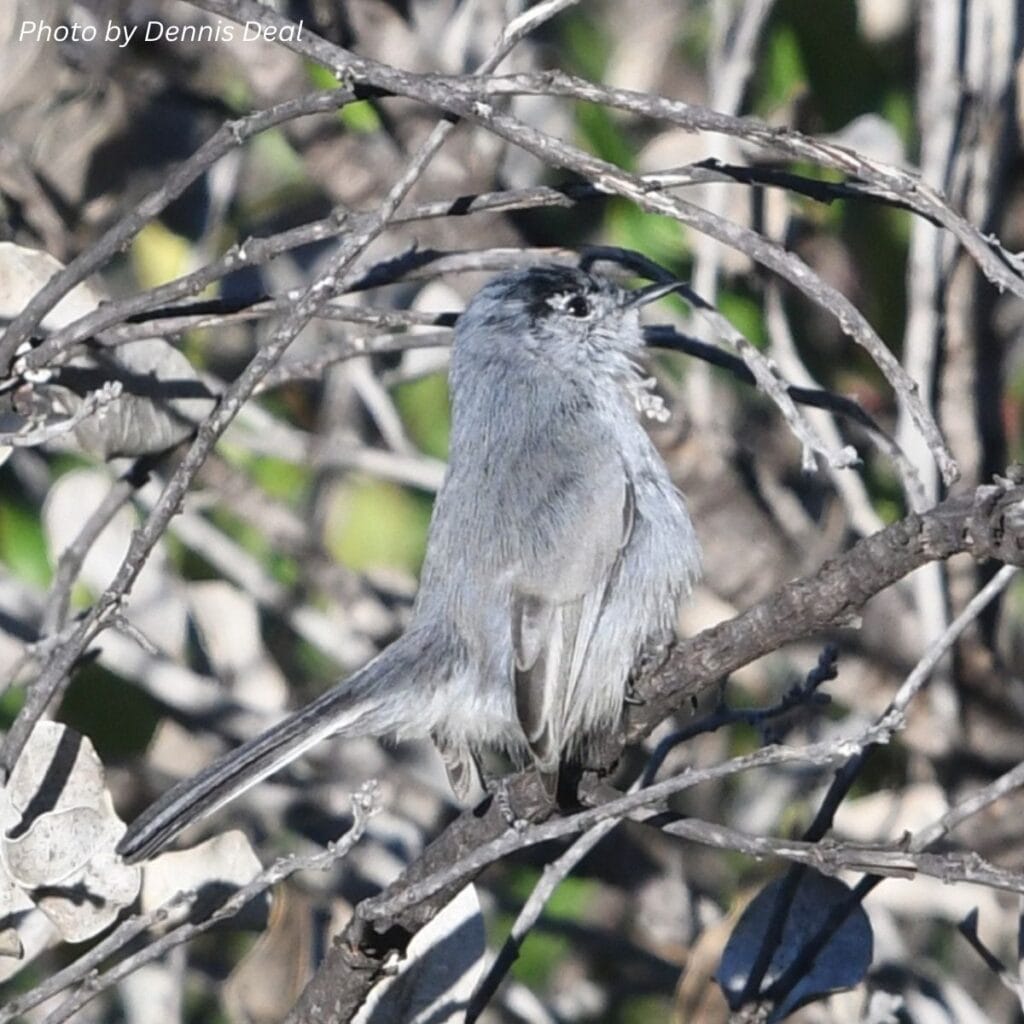
- California Gnatcatcher (endemic) – La Modena Open Space; Newport Back Bay; locations with thick concentrations of California Sagebrush.
- Greater Roadrunner – San Joaquin Marsh
- Black Skimmer – San Joaquin Marsh, Summer
- Hummingbirds – Allen’s in local urban parks; Anna’s most common in sage scrub (e.g. Laguna Coast Wilderness Park); Black-chinned in dry scrub and hills (Irvine Regional, Tucker Wildlife), spring and summer; Costa’s in the Santa Anas, spring/summer
Birds You Didn’t Know You Could Find in OC
- Calliope Hummingbird – The smallest of California’s hummingbirds, this star-throated flower finder can be rarely found at creek crossings and wildflower-heavy locations in the Santa Anas during the early Spring migration. The Maple Springs Truck Trail tends to host at least a couple every year.
- Parrots and Parakeets – Multiple species of Amazon parrots and smaller parakeets can be found at various locations throughout the county. Irvine Regional Park has high numbers of these birds, especially Red-crowned and Lilac-crowned Amazons. And at various urban parks, the raucous Mitred Parakeets can be spotted flying overhead.
- Hairy Woodpecker – Though exceedingly common in most forested areas across the country, Hairy Woodpecker is usually only found in the Santa Anas, with a small population present year-round. Look for dense clusters of large trees, or listen for their calls at high elevations where the similar-sounding Downy Woodpecker is far less likely.
- Northern Red Bishop – A tiny member of the Weaver family, this bird was introduced from northern Africa thanks to the pet trade, and while their numbers have dropped, a small population remains in the lusher parts of the Santa Ana River. Most easily seen from Arevalos Park in Huntington Beach. Males stand out for their shockingly red breeding plumage!
- Eurasian Wigeon – Closely related to our American Wigeon, this beautiful dabbling duck can be found during the winter in a variety of water bodies. Bolsa Chica Ecological Reserve, Huntington Central Park, and various other small urban parks with lakes have hosted them on a yearly basis. True to their name, this species breeds throughout the Old World, but numbers of them winter throughout the U.S. every year. Numbers increase the higher north and more coastal you are.
- Cackling Goose – While this tiny goose is uncommon during the winter, found among flocks of Canada Geese wherever those birds can be found, one individual has spent the last several years with the huge flocks of sedentary birds at Mile Square Regional Park. Best identified by its smaller size (closer to a Mallard than a Canada Goose!) and the white ring at the base of its neck, which denotes it as the Aleutian subspecies.
- Mountain Chickadee – The only Chickadee found in the county, this tiny and adorable bird can be found throughout the mountains and foothills of Orange County. Places like O’Neill Regional Park can host them, and if you were to spend the day in the higher elevations of the Santa Anas, you’re are all but guaranteed to run into at least one.
Best Times of Year for Birdwatching
Orange County’s birdlife changes considerably throughout the year, so there really isn’t a bad season to go birdwatching. That said, different times of year offer different rewards.
- Migration seasons – Spring and fall are especially exciting for birders, as migrating birds pass through Orange County on their way between breeding and wintering grounds. These seasons can bring warblers, flycatchers, shorebirds, hummingbirds, and the occasional unexpected rarity. Wetlands, parks, and other green spaces can become surprisingly busy with migrants during peak periods.
- Wintering species – Winter brings large numbers of waterfowl and other birds that spend the colder months along the California coast. Wetlands such as Bolsa Chica and San Joaquin Marsh can be particularly productive, while winter is also a good time to look for unusual northern visitors and raptors.
- Early morning vs. evening – As with most wildlife, early morning is generally the best time of day for birdwatching. Birds tend to be most active after sunrise, when they are feeding and establishing territories, and the cooler, quieter conditions make them easier to find and hear. Evening can also be productive, particularly for owls and other species that become active around dusk, but birding after dark requires additional safety precautions.
- Seasonal specialties – Different seasons bring different opportunities. Shorebird migration can be spectacular in late summer and fall, while spring brings waves of songbirds and other migrants. Winter is excellent for waterfowl and raptors, and the warmer months can produce large numbers of terns, swallows, and other coastal species.
- Pelagic birding – Searching for birds that spend most of their lives at sea is another unique opportunity along the Orange County coast, particularly for those willing to venture offshore. Hop on a whale watching trip in any season and out of any harbor, or sign up for one of Dana Wharf’s Pelagic Bird Watching Trips for a 6-hour adventure in search of rare and exciting species.
Accessibility Options for Birdwatching
Bird watching is one of those hobbies that can be surprisingly accessible because you don’t necessarily have to hike miles into the wilderness to see good birds. Some of Orange County’s best birding can be done from flat trails, paved paths, overlooks, boardwalks, and even areas where you can sit and watch the habitat without covering much ground.
Wheelchair-accessible birding spots: Bolsa Chica Ecological Reserve is one option to consider, with accessible facilities and areas of the reserve that can be reached via boardwalks and relatively level trails. Bolsa Chica State Beach is another good choice, with a flat, paved multi-use trail and accessible facilities. Keep in mind that natural areas can change with erosion, weather, sand, and maintenance, so accessibility can vary from one section of a preserve to another.
Paved trails and viewing platforms: Look for parks and preserves with paved paths, boardwalks, benches, overlooks, and designated wildlife-viewing areas. These can be particularly useful for birders who have difficulty walking long distances or navigating uneven natural-surface trails. And don’t overlook the advantage of simply finding a good spot and staying there for a while. Birds come to you, too.
Borrow binoculars from the library and OC Parks: You don’t even have to buy binoculars to try birding. Orange Public Library has dedicated Explorer Kits, including a Bird watching Kit with binoculars, a monocular telescope, bird and wildlife guides, and other outdoor equipment. The kits are available to adults 18 and older and can be checked out for three weeks, with renewals available when there are no holds.
OC Public Libraries also offers California State Library Parks Pass Backpacks that include a set of binoculars along with a California State Parks pass and pocket guides. These are available through the library’s Library of Things collection.
OC Parks occasionally provides binoculars to borrow during its guided bird walks and nature programs. For example, the Mile Square Regional Park birding walk specifically notes that binoculars are available to borrow for the duration of the program.
For someone who is curious about birding but isn’t ready to spend money on equipment, these programs are a pretty great way to start. You can borrow the gear, head outside, and figure out what you actually enjoy before investing in your own binoculars.
Photography Tips for Birders
You don’t need an expensive camera to take good bird pictures. A phone can work surprisingly well for larger birds or close-up encounters, while a camera with a telephoto lens gives you much more reach for smaller or distant species. The biggest trick is patience. Find a good spot, stay still, and let the birds come to you rather than chasing them around. Shoot in good light when possible, use a fast shutter speed for birds in motion, and take plenty of photos. You can delete the bad ones later.
🐦 Keep wildlife photography ethical. Never chase, corner, flush, bait, or intentionally disturb a bird to get a photo. Don’t approach nests or nesting birds, and avoid sharing exact locations of particularly sensitive species. If a bird changes its behavior because of you, you’re too close. A long lens is supposed to bring the bird closer to you, not the other way around.
Good Spots for Bird Photography in Orange County
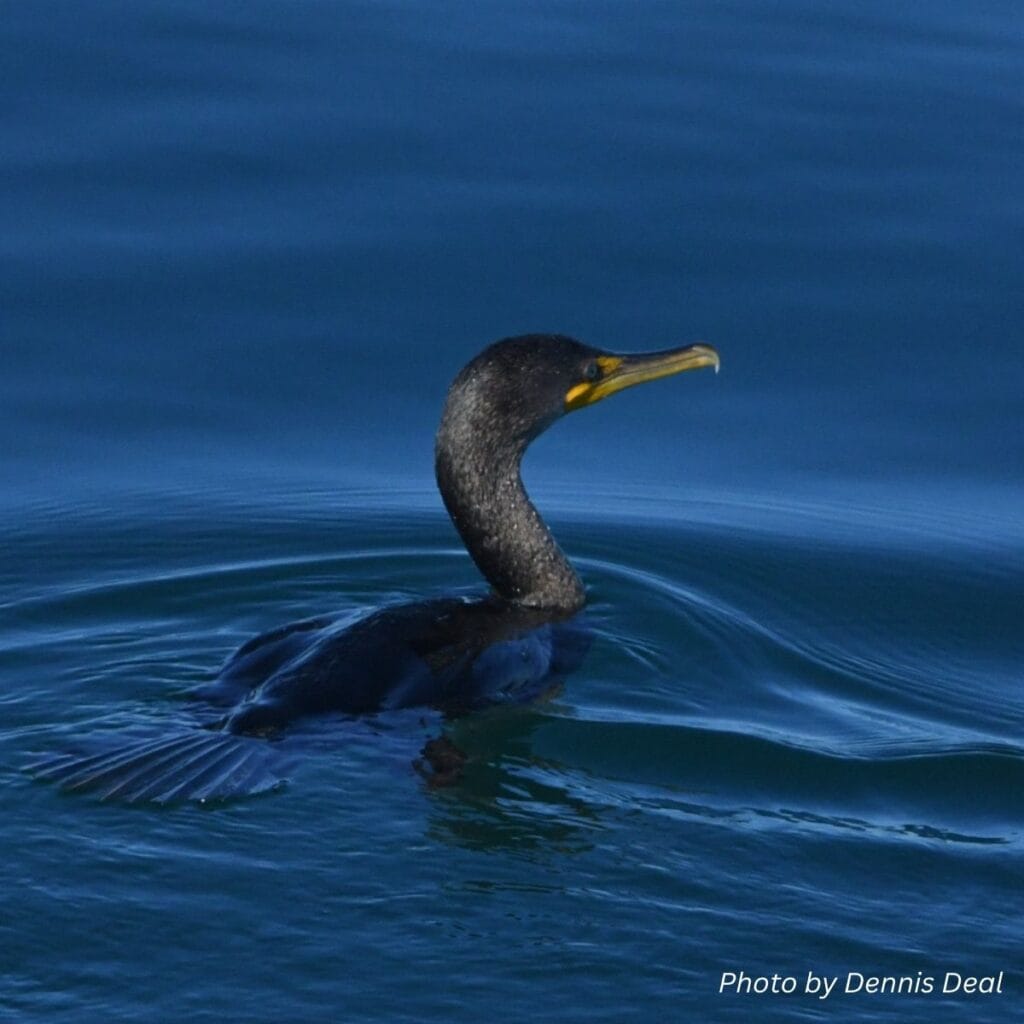
- Bolsa Chica Ecological Reserve — Probably the obvious heavyweight for bird photography in OC. The bridge over the Inner Bay gives you unusually close, unobstructed views of waterbirds, and the wetlands can be fantastic for birds in flight, feeding activity, and colorful reflections. And as a nearby contender, there are often rare and significant birds at the nearby Sunset Aquatic Marina at the end of Edinger.
- San Joaquin Wildlife Sanctuary — Ponds, reeds, trees, open water, and lots of bird activity make this one of the most consistently productive spots for photographers.
- Huntington Central Park — The lakes and surrounding vegetation attract an impressive variety of birds, and the relatively urban setting means you can often get close without a backcountry hike.
- Huntington Central Park East — Worth treating separately from the main park. It has its own habitat and regularly turns up interesting species.
- William R. Mason Regional Park — The lake, trees, grassy areas, and creek habitat provide plenty of opportunities for both waterbirds and smaller songbirds.
- Upper Newport Bay Nature Preserve — The bluff trails give photographers broad views over the bay, while the wetlands below can be packed with shorebirds and waterfowl.
- Newport Back Bay / Back Bay Drive — One of my favorite options for photographers who want birds and beautiful scenery in the same frame. The changing light over the water can be just as much fun to photograph as the birds.
- Muth Interpretive Center area — A particularly good access point for Upper Newport Bay, with wetlands, trails, and plenty of opportunities to work from different angles.
- Laguna Niguel Regional Park — The lake and surrounding trees attract waterfowl, wading birds, raptors, and songbirds, with plenty of natural backdrops.
- Harriett M. Wieder Regional Park — Adjacent to Bolsa Chica, this is an easy place to combine wetland birding with photography without committing to a long trek.
- Talbert Regional Park — The wetlands and open areas along the Santa Ana River attract herons, egrets, hawks, harriers, and other birds. The open habitat can also make it easier to photograph birds in flight.
- Peters Canyon Regional Park — A good choice for photographers who want to move beyond wetlands and photograph birds in oak woodland, riparian, and upland habitats.
- Irvine Regional Park — Lakes, mature trees, creek habitat, and open areas create a nice mix of opportunities, especially in the early morning.
- Yorba Regional Park — The lakes and Santa Ana River corridor attract waterbirds and smaller birds, while the long, relatively easy paths make it possible to cover a lot of ground looking for different subjects.
- Santiago Oaks Regional Park — Head here for a completely different look: oak woodland, sycamores, hills, and canyon habitat.
- Aliso and Wood Canyons Wilderness Park — One of the more diverse habitats in the county, with riparian areas, oak woodland, coastal sage scrub, and grassland. It’s particularly good for photographers hoping to move beyond the usual ducks and shorebirds.
- Laguna Coast Wilderness Park — Coastal sage scrub and canyon habitat make this a good place to look for California specialties, hummingbirds, hawks, and songbirds.
- Crystal Cove State Park — Don’t limit yourself to the wetlands. The coastal cliffs, sage scrub, beaches, and rocky shoreline create opportunities for both seabirds and birds using the coastal habitat.
- Coal Canyon Ecological Reserve — A particularly interesting choice for photographers wanting mountain and foothill species rather than coastal birds.
- Whiting Ranch Wilderness Park — Oak woodland and canyon habitat provide opportunities for species you won’t necessarily encounter around the coastal wetlands.
- Bommer Canyon — The combination of oak and sycamore woodland, grassland, and coastal sage scrub makes this a beautiful setting for photographing both birds and their habitat.
- Carbon Canyon Regional Park — A nice mix of lake, woodland, and open habitat, with the added bonus of mature trees that can provide good natural perches.
- Craig Regional Park — Another overlooked urban park with lakes, trees, and open habitat that can produce surprisingly good bird photos.
- Mile Square Regional Park — Don’t underestimate neighborhood parks. Its ponds, trees, and open areas attract enough variety to make this a worthwhile photography stop, especially during migration.
And honestly, some of the best bird photography in Orange County happens in places that don’t look particularly wild at first glance. The county’s network of parks, golf-course ponds, river corridors, wetlands, and open spaces creates a surprising number of little birding pockets. That’s part of what makes OC such a fun place to bird. You don’t necessarily have to drive two hours into the mountains to find something interesting.
Bird Conservation & How You Can Help
Orange County is heavily developed, but its wetlands, coastal sage scrub, oak woodlands, beaches, and river corridors provide important habitat for hundreds of bird species. Those habitats are under constant pressure from development, habitat loss and fragmentation, pollution, invasive plants, pesticides, free-roaming cats, human disturbance, and climate change. Migrating birds are especially vulnerable because they depend on a network of healthy habitats throughout their journeys. The good news is that you don’t have to be a scientist to help.
Support local habitat conservation. Volunteer for habitat restoration, beach and wetland cleanups, native plant projects, or bird counts. Organizations such as Sea & Sage Audubon Society, Bolsa Chica Conservancy, Newport Bay Conservancy, OC Parks, and local land trusts and nature centers offer opportunities to volunteer, participate in citizen-science projects, or support conservation through donations. Even helping remove invasive plants or picking up trash can make a real difference to the birds using these habitats.
Practice leave-no-trace birding. Stay on designated trails, pack out your trash, don’t pick plants, and keep dogs leashed where required. Give birds plenty of space, particularly during nesting and migration seasons. Never approach nests, handle eggs or chicks, or use recordings to lure birds out for a better look or photograph. Avoid feeding wild birds, and don’t leave fishing line, food, plastic, or other trash behind. Have you seen that section of beach at Bolsa Chica that is roped off with signs every 10 feet about sensitive areas to protect the birds? Yes, we take this seriously.
And if you’re a bird photographer, remember that getting the shot is never more important than the bird. If your presence causes a bird to change its behavior, fly away, stop feeding, or repeatedly call in alarm, back up. The best birding experiences are the ones where you leave the habitat and the birds in it, just as you found them.
Maps & Suggested Sample Birdwatching Itineraries
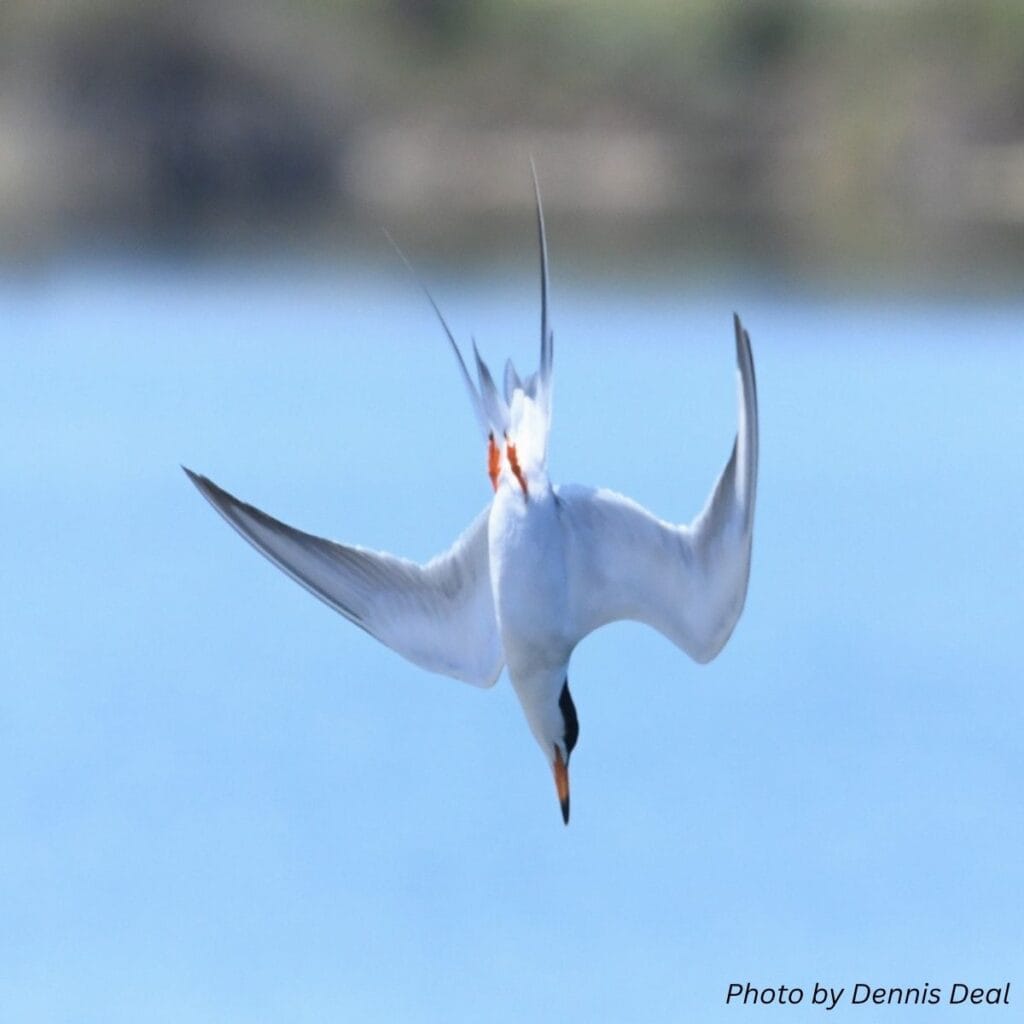
If you’re not sure where to start, it helps to think of Orange County birding in terms of small day trips. Pick a habitat, give yourself a few hours, and add breakfast or brunch afterward. Here are a few easy routes to try.
Half-Day Birding in Newport Back Bay
Start early at the Peter & Mary Muth Interpretive Center, where you can walk the trails around Upper Newport Bay and look across the wetlands for shorebirds, waterfowl, wading birds, raptors, and seasonal migrants. From there, continue along Back Bay Drive and the Back Bay Loop, stopping whenever you spot something interesting. The paved portion makes this a particularly easy outing, and the entire loop offers plenty of places to stop and scan the bay.
Allow about 2–3 hours for birding, longer if you’re a photographer. Then reward yourself with brunch in Newport Beach.
South County Birdwatching Route
For a full morning of South County birding, start at Aliso and Wood Canyons Wilderness Park, where the creek, mature trees, and surrounding canyon habitat give you a chance at songbirds, hummingbirds, hawks, and other species you won’t necessarily find in the coastal wetlands. From there, head toward Laguna Coast Wilderness Park for coastal sage scrub, oak and sycamore woodland, and canyon habitat. Finish at Crystal Cove State Park, where you can switch things up with coastal birds and the open-space habitat around Moro Canyon. These three parks are all part of the larger South Coast Wilderness area.
This route can easily fill half a day or most of a day if you’re stopping frequently to bird. Just remember that some of the South County trails are uneven and hilly, so this isn’t the route I’d choose if you’re looking for a completely flat outing.
Birding + Brunch
There is nothing wrong with building your birding day around food. In fact, I highly recommend it. Pick an early-morning birding spot, get out while the birds are active, and then head somewhere nearby for breakfast or brunch.
A few easy combinations:
- Upper Newport Bay + OEB Kitchen: Bird the bay early, then head over to Westcliff for a substantial breakfast.
- Huntington Central Park + Eat Chow: Spend the morning around the lakes and wooded areas, then head toward the beach for brunch.
- Crystal Cove + a Laguna Beach brunch: Get your birding done early, then continue south for food and a little wandering around town.
- Aliso and Wood Canyons + Laguna Beach: Start with the creek and canyon habitat, then make your way toward the coast.
- Newport Back Bay + Haute Cakes Caffe: A particularly easy combination if you want a low-key morning of birding followed by coffee, pancakes, or breakfast.
The basic rule is simple: bird early, eat well afterward. That’s a pretty hard day to beat.