
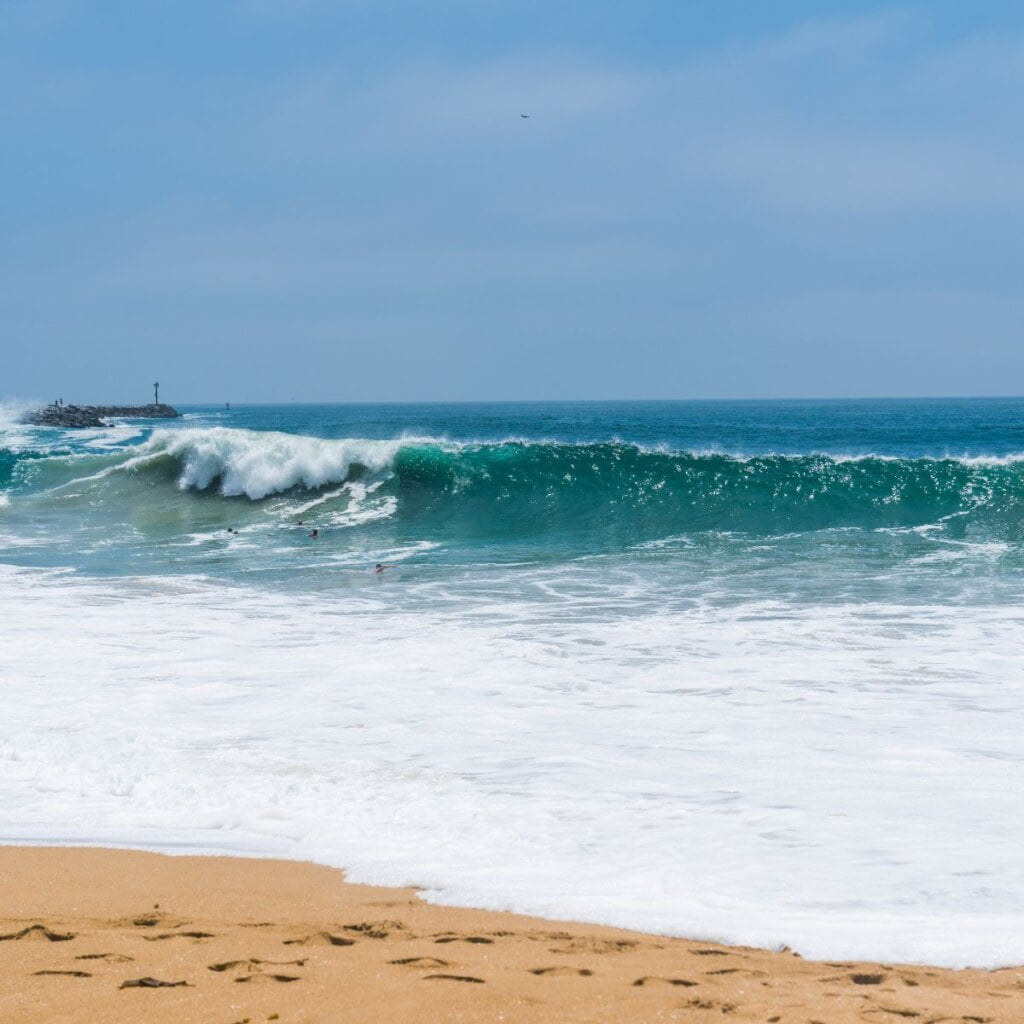
The Wedge in Newport Beach is one of Southern California’s most famous surf spots, known for powerful shorebreak that can grow dramatically during strong south and southwest swells. It is also one of the best places in Orange County to watch big waves from shore. Most visitors should experience The Wedge as a viewing and photography destination rather than a place to enter the water.
Safety first: The Wedge is not a beginner surfing or swimming spot. During large surf, the shorebreak, currents, shallow impact zone and nearby jetty can create extremely hazardous conditions. Follow lifeguard instructions and posted restrictions at all times.
Jump to: Quick Info | What Is The Wedge? | Why Waves Get Big | Safety | Surf & Blackball Rules | Best Time to Visit | Location & Parking | History | Nearby | FAQ
The Wedge Quick Information
| Location | End of the Balboa Peninsula near Channel Road |
|---|---|
| Best For | Watching large waves, photography and experienced bodysurfing/surfing |
| Admission | Free |
| Parking | Residential street parking; can be very limited during large swells and busy weekends |
| Beginner Friendly? | No |
| Best Wave Setup | Strong south/southwest swell combined with favorable local conditions |
What Is The Wedge?
The Wedge is a famous shorebreak at the west side of the Newport Harbor entrance, at the tip of the Balboa Peninsula. Waves approaching from the south and southwest can interact with the harbor jetty and shallow shoreline in a way that amplifies the surf and creates the steep, explosive break for which the spot is known.
The location is especially important in bodysurfing and bodyboarding culture, although experienced surfers also ride it when conditions and current City rules permit. It is just as popular with spectators who come to watch large swells from the sand.
Why Are the Waves at The Wedge So Big?
The Wedge’s wave shape comes from a combination of swell direction, the harbor jetty, reflected wave energy and the rapidly shallowing beach. When an incoming south or southwest swell reaches the jetty, some wave energy reflects back toward the beach and can meet incoming waves at an angle. The shallow nearshore bottom then causes the combined wave to steepen quickly and break with unusual force close to shore.
Not every day produces giant waves. Size depends on swell direction, swell period, tide, wind and other local conditions. During the strongest events, wave faces can reach roughly 20 to 30 feet, but much smaller surf is common on ordinary days.
Is The Wedge Dangerous?
Yes. The Wedge can be extremely dangerous during large surf. The main hazards include powerful shorebreak, impact with the shallow bottom, strong currents, rapidly changing wave conditions and the nearby rock jetty. Injuries can occur even to experienced water users.
- Do not treat The Wedge as a beginner surf or swimming beach.
- Watch from well back on the sand when large sets are running; surges can reach farther up the beach than expected.
- Never climb or enter the water near the jetty during hazardous surf.
- Follow lifeguard directions, posted signs and flag warnings.
- If conditions look beyond your experience level, stay out of the water.
Surfing, Bodysurfing & Blackball Rules
The Wedge has special seasonal use rules. According to the City of Newport Beach, from May 1 through October 31, the area between Lifeguard Towers 40 and 44 is a designated blackball area with no surfing or skimming. At The Wedge specifically, flotation devices are prohibited from 10 a.m. to 5 p.m. during that same May 1–October 31 period, which means bodysurfing only during those hours—no bodyboards, surfboards or skimboards.
Outside those periods, conditions and lifeguard instructions still control. Check the City’s current Marine Operations beach rules before entering the water.
Best Time to See Big Waves at The Wedge
The biggest Wedge days typically occur when strong south or southwest swells reach Newport Beach. These are often associated with distant storms and can occur during the warmer-season south-swell window, but there is no guaranteed calendar date for large surf. Swell angle, period, tide and local wind all matter.
For a specific visit, check a current surf forecast and official Newport Beach safety information before leaving home. If a major swell is expected, arrive early because both parking and shoreline viewing space can fill quickly.
Watching The Wedge From Shore
You do not need to enter the water to enjoy The Wedge. Spectators generally watch from the sand along the west side of the jetty. On large-wave days, stay well back from the waterline, keep camera equipment clear of surging water and avoid blocking access routes used by lifeguards and emergency personnel.
The surrounding area is residential, so keep noise down, avoid blocking driveways and follow all parking signs. This is especially important during major swell events when crowds can be substantial.
Where Is The Wedge?
The Wedge is at the end of the Balboa Peninsula where the Newport Harbor entrance meets the Pacific Ocean. For navigation, use the general area around 2300 Channel Road, Newport Beach, CA 92661, then walk toward the west harbor jetty and oceanfront.
Where to Park at The Wedge
There is no large dedicated parking lot at The Wedge. Parking is primarily on surrounding residential streets, subject to posted restrictions. On ordinary days it may be manageable, but during summer weekends and major swell events street parking can become very limited. Another option is to park farther up the peninsula and walk or bike to the jetty.
History of The Wedge
The Wedge is a byproduct of Newport Harbor improvements made in the 1930s. The harbor entrance jetties were built to make navigation safer and more reliable. The west jetty also changed how incoming swell behaves along this part of the coast, creating the reflected-wave interaction that eventually made The Wedge famous.
Over time, the spot became an important part of Southern California surf culture, especially for bodysurfers and bodyboarders. It remains one of Newport Beach’s most recognizable coastal landmarks and a frequent gathering place whenever a major south swell arrives.
For current competitions and surf events elsewhere in the county, see our Orange County surf competitions and events guide.
Surf Shops Near The Wedge
These Newport Beach surf shops are useful for boards, wetsuits, beach gear and local surf supplies. Services and rental inventory can change, so check directly with the shop before making a special trip.
The Frog House Surf Shop
6908 W. Coast Highway, Newport Beach. A longtime Newport Beach surf shop selling surfboards and wetsuits and offering surfboard and wetsuit repair services.
Daydream Surf Shop
864 W. 16th Street, Newport Beach. Daydream combines a surf shop and café and carries surfboards, apparel and accessories. Its official site currently lists daily hours of 7 a.m.–5 p.m.
15th St Surf + Supply
103 15th Street, Newport Beach. The independently operated shop has served the peninsula since 1961 and offers beach supplies and rentals. A second Newport Beach location operates at 3138 W. Balboa Blvd.
Things to Do Near The Wedge
- Balboa Fun Zone — waterfront shops, food, harbor activities, Ferris wheel and access to the Balboa Island Ferry.
- Balboa Island — walk Marine Avenue, explore the bayfront and ride the ferry.
- Newport Harbor — boating, dining and waterfront sightseeing.
- Whale Watching — cruises depart from Newport Harbor, with different whale species seen seasonally; sightings are never guaranteed.
- Fashion Island — shopping and dining in Newport Beach.
- Sherman Library & Gardens — botanical gardens and regional history in Corona del Mar.
The Wedge Newport Beach FAQs
Why are the waves at The Wedge so big?
Incoming south and southwest swells can reflect off the Newport Harbor jetty and interact with incoming waves. The shallow shoreline then causes the combined energy to steepen rapidly into the powerful shorebreak The Wedge is known for.
How big do waves get at The Wedge?
On major swell events, wave faces can reach roughly 20 to 30 feet. Most days are much smaller, and the exact size depends on swell direction, period, tide and wind.
Is The Wedge safe for swimming?
It is not a good casual swimming location when surf is elevated. The steep shorebreak and currents can be dangerous even for experienced ocean users. Follow lifeguard guidance and choose a calmer Newport Beach beach for recreational swimming.
Can beginners surf The Wedge?
No. The Wedge is an advanced surf and bodysurfing environment, particularly during the large conditions that make it famous.
Where is The Wedge in Newport Beach?
It is at the end of the Balboa Peninsula next to the west jetty at the Newport Harbor entrance. The general navigation area is around 2300 Channel Road.
Where do you park for The Wedge?
Parking is primarily on residential streets near the end of the peninsula. It can become difficult during major swells, weekends and summer, so arriving early or parking farther away and walking can be easier.
When is the best time to see big waves at The Wedge?
Large south and southwest swells create the most dramatic conditions. Check a current surf forecast rather than relying on a fixed month or date.
Can you surf The Wedge?
Surfing is subject to City blackball rules and current lifeguard restrictions. From May 1 through October 31, surfing and skimming are prohibited in the designated Towers 40–44 blackball area, and The Wedge is bodysurfing-only from 10 a.m.–5 p.m. because flotation devices are prohibited during those hours.
Is The Wedge free to visit?
Yes. There is no admission fee to visit the beach. Parking rules and restrictions still apply.
Related Orange County Guides
- Best Beaches in Newport Beach
- Best Surf Spots in Orange County
- Surf Competitions & Events in Orange County
- Newport Harbor Guide
- Surf Lessons & Camps in Orange County
Surf conditions, beach restrictions and lifeguard instructions can change. City of Newport Beach Marine Operations and on-site lifeguards are the final authority for current safety conditions and use restrictions.